Showing posts with label Norman Maclean. Show all posts

Sunday, March 13, 2016

Disappointed


Robert Redford is an admirable man and in many cases we share a love for the same really good stories, among the most notable, Norman Maclean's A River Runs Through It. After being approached by several film makers Norman finally signed rights to cinematize ARRTI to Redford. The result, for me, was a mixed, certainly not a total, success. Norman did not live to see it on screen, so we will never know what he would have thought.

In the movie ARRTI Redford was the author's voice, unseen. Even though I knew Norman, and his voice (in the literal as well as literary senses) very well, it wasn't the voiceover that bothered me but rather the over-simplification of character (all of them) throughout the movie. Since it was directed and produced by Redford I have to assume that was because of the decisions he made, based on his understanding of the people Norman wrote about. Redford and I did not share that understanding.

Bill Bryson is another favorite author, albeit of a very different ilk, and his 1998 A Walk in the Woods: Rediscovering America on the Appalachian Trail is among his outstanding books I can best relate to. Last night we watched the movie, with Redford playing Bryson. Note that while Redford didn't direct the movie (Ken Kwapis did), he was the producer. Which resulted in woefully miscasting himself, most glaringly because Bryson was in his  mid-40s when he walked the Appalachian Trail; at least Redford doesn't pretend (except for the hair dye) to be anything other than the nearly 80 year old that he is. This out-of-time re-imagining of  people in Bryson's story substantially alters it, and the movie should have at least acknowledged what it would have meant to do a harrowing, 2,000 mile hike as an out-of-shape octogenarian, as Bryson did so entertainingly as an out-of-shape middle-ager.  And once again actor Redford goes so far overboard to avoid any hint of emotion (fear, longing, joy, fulfillment, love, frustration, to name a few apt possibilities), when the film adventure was over I was left wondering what, if anything, the Bryson character got out of the experience. Nary a blister, apparently.
Not so with Bill Bryson's original telling of it.

Mr. Redford, it's true what they say, discretion is the better part of valor. To get the best result from your investments, next time step aside and let a better actor play the part, and relinquish control to a better director.
One final note: Hollywood has again availed itself of the opportunity to mis-characterize wildlife, the only representatives of which in the entire film (except for one unremarked hawk flying past a hotel lobby window behind the hikers) were two black bears that stood and "growled," like only trained bears with dubbed soundtracks do, when Bryson and his hiking companion emerge from their tents to witness the animals making off with a bag of food. This is an almost dangerous understatement of the true hazards of cavalier human behavior in the wild.

Sunday, April 3, 2011

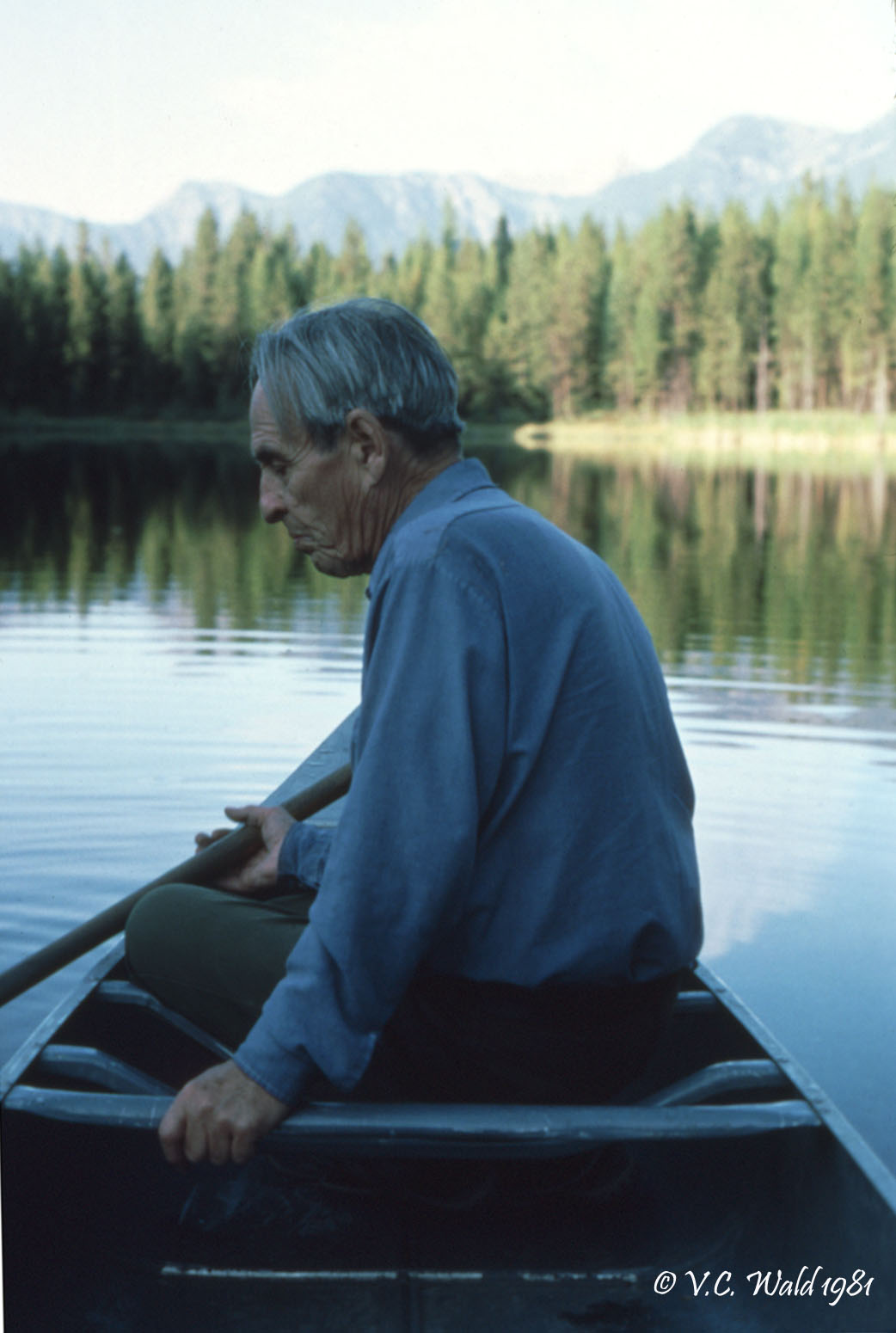
Too Many Norman Stories: Story 1. The Truth Behind the Photo

In 1975 my fiancĂ© (now my ex-) and I moved into a neat little condominium, with a wood burning fireplace of all rarities, at 55th and Woodlawn in the Hyde Park neighborhood, a couple of blocks from the University of Chicago campus where we both worked. We soon began to hear about “the old professor” living in the unit below ours, recently rocketed to unbidden celebrity for his two-short-stories-and-a-novella book, A River Runs Through It and Other Stories. By 2011, everyone has heard of A River Runs Through It, cinematized by Robert Redford in 1992 (starring young heartthrob Brad Pitt in the role of Norman's brother Paul), but in those days ARRTI was a book, a book of stories resplendent with dimension and imagery, love and loss, trials and triumphs. 

My undergraduate years at the University were only just behind me, and I feared the English professor emeritus would be tough on me. But it wasn’t long before I met and fell unconditionally in love with Norman Maclean. The gruff guy was his persona, but always, always there was affection underpinning everything he said and did around me. And he was kind enough not to complain--much--about our noisy habits over his head.

Norman and his wife Jessie had moved into their condo from a large neighborhood home after their children, John and Jean, had fledged and Jessie was already suffering from the lung ailment that finally took her in 1968, the same year I washed up on the shores of the University of Chicago as a freshman.  

When we entertained we frequently included Norman among other guests, or he came up on his own, for a meal or a cup of coffee. He missed Jesse so terribly, in spite of his busy new career as author-in-demand.  I kept his undated thank-you in which, in his sweetly self-deprecating way, he  reveals all of that and more:

Veronica: It was very nice the other evening. I’m sorry that I stay above [a reference to our home’s location relative to his] too much, because when I’m allowed...I stay too long and talk too much. The fire was nice too. .

I had by this time read, and re-read, ARRTI, and wept (and still do) at the end unfailingly. I was a member of an all-women book club, two monthly meetings of which he graced with his authorial presence. He called us "the Girl Scouts” but there’s no question he enjoyed the opportunity for intimate discussion of his works and respected the bright readers that we were.
The Maclean cabin at Seeley Lake, 1981
Copyrighted and not to be used without permission

Although I’d always been an outdoorsy girl, I didn’t know much about the northern Rockies where the stories were set, so I was thrilled when along came the opportunity in 1981 to stop in at the family cabin on Seeley Lake, Montana where he spent his summers thinking, writing, and fishing.  Norman was a warm host, cooking us big mountain breakfasts, arranging a tour of the local sawmill, driving us far up logging roads into the mountains, and taking us on an unannounced visit to the cabin of this friend Bud Moore and his wife. Alas, the Moores were not in.  But their canoe was sitting by the shore, and Norman said to me, “let’s go for paddle” around the large beaver pond on the property. I was in the back, and my job was to steer. He sat in the bow, offering, as the man (albeit a 79-year old one), the power strokes to move the canoe ahead through the sweet afternoon light of the high mountain waters. Mind you, Norman was an accomplished mountain man, and was especially comfortable on water, be it a rushing trout stream or a serene tarn. Mind you, I was a citified young woman with armloads of camera equipment and boatloads of good will. But no experience or instinct handling a canoe. This made for a slightly riotous ride. When the frustrated Norman turned back to say, “Darlin’!” as he called me and all women he loved, and to unleash annotated comments on what I was doing wrong and how, unless I performed as instructed, we were going to capsize, I whipped the camera to my eye, and caught what has often been captioned as Norman Maclean in “a contemplative moment.” Thank God the canoe made it safely back to shore, my roll of film dry and intact, for the photo, which was first picked up by the University of Chicago Press to use on blurbs and promotional material for later editions of AARTI, has become iconic. 
Copyrighted and not to be used without permission.

More Norman Maclean stories, of which there are many but somehow are mostly about me, to come...

Norman Maclean MUST reads:
  • A River Runs Through It and Other Stories
  • Young Men and Fire: A True Story of the Mann Gulch Fire
  • The Norman Maclean Reader: Essays, Letters, and Other Writings by the Author of A River Runs Through It, edited by O. Allen Weltzein
Norman, I will always miss you.  

Sunday, September 28, 2008

In memoriam

I awakened to the truly sad news this morning that Paul Newman has died at the age of 83. In appearance and in other personality characteristics, he reminded me a lot of my beloved friend and neighbor, Norman Maclean. Norman was known around the world as the author of A River Runs Through It, and a second book, Young Men and Fire that was published posthumously following brilliant editing by University of Chicago Press editor, Alan Thomas. Of course, A River Runs Through It was made into a highly successful Robert Redford movie that was released in 1992, two years after Norman's death at the age of 88.
The same year the movie was released, Young Men and Fire was published and soon after Hollywood approached his family (son John Maclean and daughter Jean Maclean Snyder) about optioning it for a movie as well. It got as far as several screen play versions, though none seemed to John and Jean to adequately capture Norman's intent. In conversation with Norman's son-in-law, Joel Snyder, I learned that Clint Eastwood had been proposed to play Norman in the would-be film. While that was not unreasonable, by far the best match in terms of looks, age (at the time of Norman's involvement in the events described in Young Men and Fire), and persona, Paul Newman would have been the ultimate choice.
I took this photo of Norman in our Chicago back yard in the fall of 1982, about a year after we visited Yellowstone, the Grand Tetons, and Norman at the Maclean family cabin in Seeley Lake, Montana. That wonderful trip, and what I learned about the world from Norman Maclean through the years I knew him, were to set the course of my life. I loved Norman deeply, and the loss of Paul Newman has opened anew the pain of his passing.